Reason, Carnival and Honour: An Anthropology of Free Speech
Candea, M., 2026 Reason, Carnival and Honour: an Anthropology of Free Speech, London: Penguin
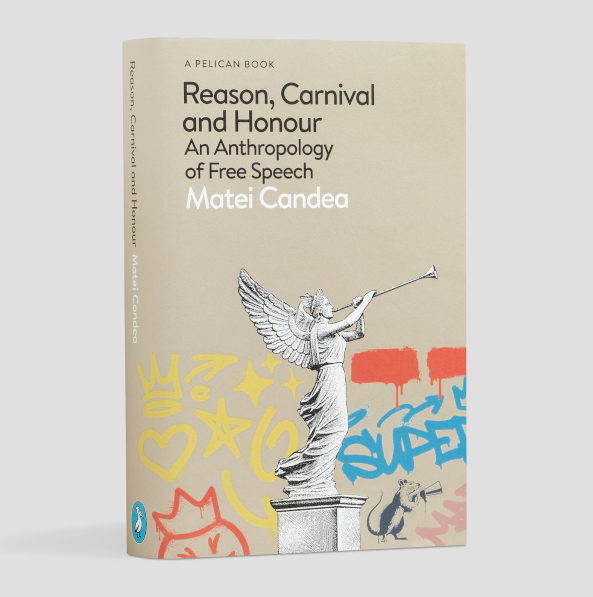
This is my first trade book, published by Penguin.
Reason, Carnival and Honour is also available as an audiobook (it was a lot of fun recording it!)
Read related pieces in The Guardian and The Conversation.
‘richly provocative … an important book that will open shuttered minds’ - Daily Telegraph
‘Reason, Carnival and Honour is a must-read for anyone who wants to take seriously the claims they live by and — just as crucially — the claims of others’ — Matthew Engelke
‘Anyone with a serious interest in these debates and controversies will want to read this book, and will find much to admire, provoke, amuse and surprise. It is a splendid vindication of anthropology’s capacity to address matters of wide concern in original ways’ — James Laidlaw
‘a fresh and thought-provoking analysis of what our battles over free speech are really about, and why they are so heated and intractable.’ - Fara Dabhoiwala
How might anthropology help us navigate free speech debates?
Is free speech increasingly under attack in western liberal democracies? Or is this claim just a conservative moral panic? Is society becoming over-sensitive and intolerant? Or is free speech being weaponised by the powerful? These questions have polarised public opinion over the past decade, with journalists, essayists and academics marshalling anecdotes, evidence and diatribe in support of each position. More broadly, struggles over what can or cannot, should or should not be said (and by whom, and how) seem to shadow every other recent event or public debate, from #metoo to the takeover of Twitter/X by Elon Musk, from Brexit to BLM, from arguments over Trans rights to the war in Gaza.
These debates don’t just happen in the news: they divide families, reshape friendship groups, strain relationships. They lead to blazing rows or sullen silences. This is because arguments about free speech are not just about abstract principles. They are arguments about what it means to be a good person, about empathy and courage, about caring for others and taking a stand. They involve fears for the future and longings for the past. They feel immediate, and they demand that you pick a side, right now!
Reason, Carnival and Honour takes a fresh look at these arguments from an anthropological perspective, drawing on my own research and on a wide-ranging review of anthropological and historical literature on language, freedom, publics and ethics. Through a range of concrete examples, the book shows how an anthropological perspective can help us tease out different entangled cultural visions of what free speech is about - a complexity which challenges the seemingly clear-cut battle lines of the “free speech wars”.
The book explores three ‘modes’ in which freedom of speech is genuinely desired, fought for or mourned: the defence of civil rational debate (Reason), the drive to express oneself against oppression and convention (Carnival), and the duty to stand by one’s word (Honour). Sometimes supporting each other and sometimes at odds, these visions of free speech entail very different understandings of what language is and does, of what it means to be free, and of who is speaking to whom. None of these visions imagines freedom of speech as entirely unlimited, but the limits they place are different. It is often where the limits of one vision clash with the aspirations of another, that free speech controversies arise.
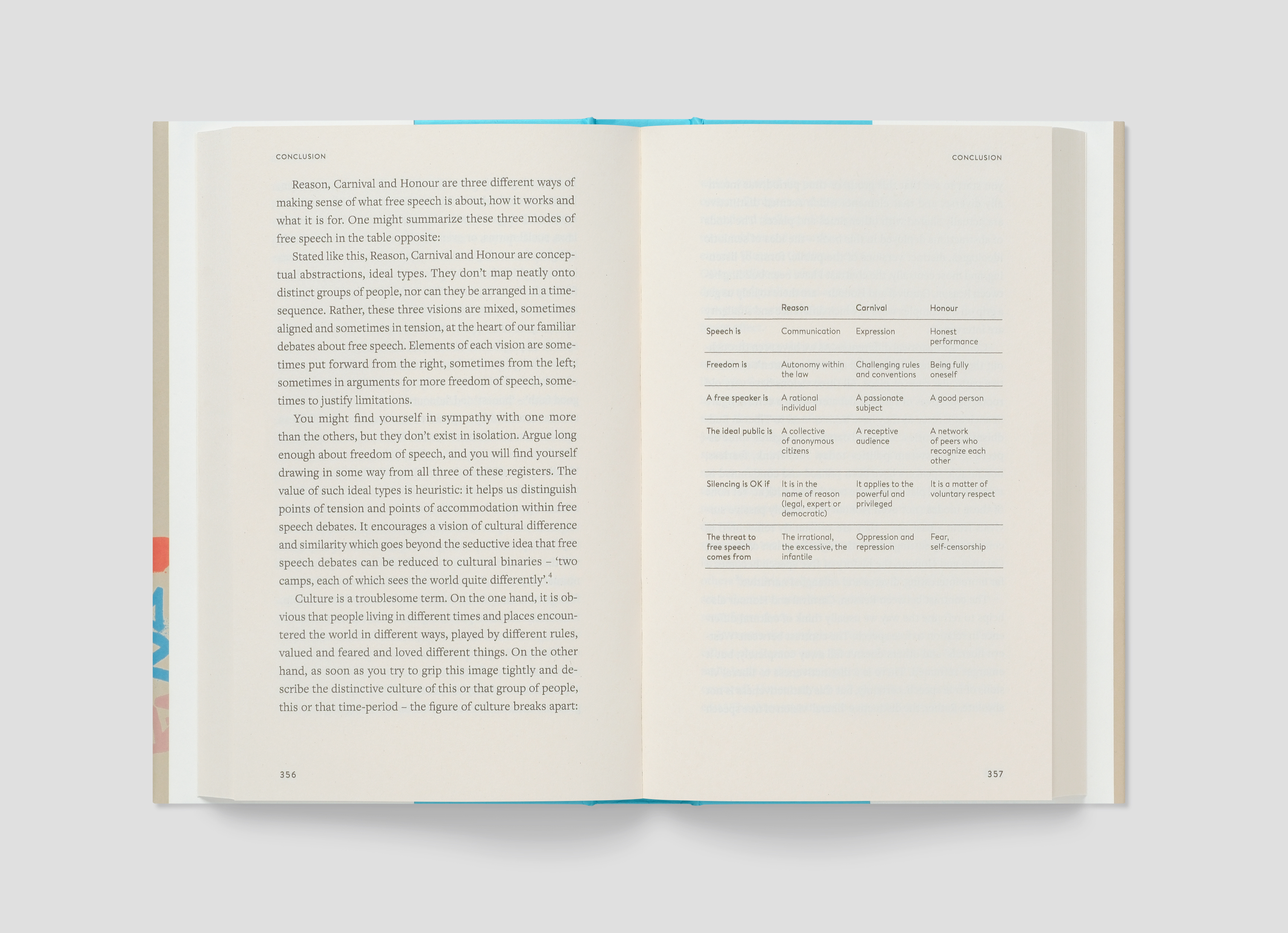
Unpicking the predictable back and forth between opponents of “woke cancel culture" and those who dismiss concerns about free speech as a conservative moral panic, the book deploys the power of anthropology to reveal a richer landscape of differences - and potential accommodations - between our partly shared cultures of free speech. The aim is not to silence free speech debates, but to provide a more accurate, less caricatured sense of what it is we are arguing about, where we really disagree and what is never in question. Such a shared sense could be a prelude to new alliances, or it could be a prelude to a renewed debate. But at least we would not be talking past each other quite so often.