SAN2. Rethinking Comparison
Lecture 3: related and unrelated
(handout)Matei Candea
[email protected]
Introduction
I. Related or unrelated?
Galton's problem
Tylor, E. B. 1889. On a method of investigating the development of institutions; applied to laws of marriage and descent. The journal of the anthropological institute of Great Britain and Ireland.
- Tylor: cross-cultural similarities point to functional principles
- Galton: … or to cultural diffusion?
The bigger picture: evolution versus history
“While formerly identities or similarities of culture were considered incontrovertible proof of historical connection, or even of common origin, the new school [”evolutionists” e.g. Tylor] declines to consider them as such, but interprets them as results of the uniform working of the human mind. […] The fact that many fundamental features of culture are universal, or at least occur in many isolated places, interpreted by the assumption that the same features must always have developed from the same causes, leads to the conclusion that there is one grand system according to which mankind has developed everywhere. [But] we must […] consider all the ingenious attempts at constructions of a grand system of the evolution of society as of very doubtful value, unless at the same time proof is given that the same phenomena could not develop by any other method. Until this is done, the presumption is always in favor of a variety of courses which historical growth may have taken.” (Boas, 1896)
| Tylorean Evolutionism | Boasian history | |
| the underlying model | fundamental unity of the human mind develops the same solutions in analogous settings | complex multiple historical trajectories and borrowing of cultural traits |
| interesting comparisons | find similarities in widely different cases | trace siilarities and differences between related cases |
Why should we care?
- evolutionism and diffusionism are dead
- (most) anthropologists are not statistical scientists in search of “independent variables”, “correlations” and the like
but these old debates point to a true and interesting distinction…
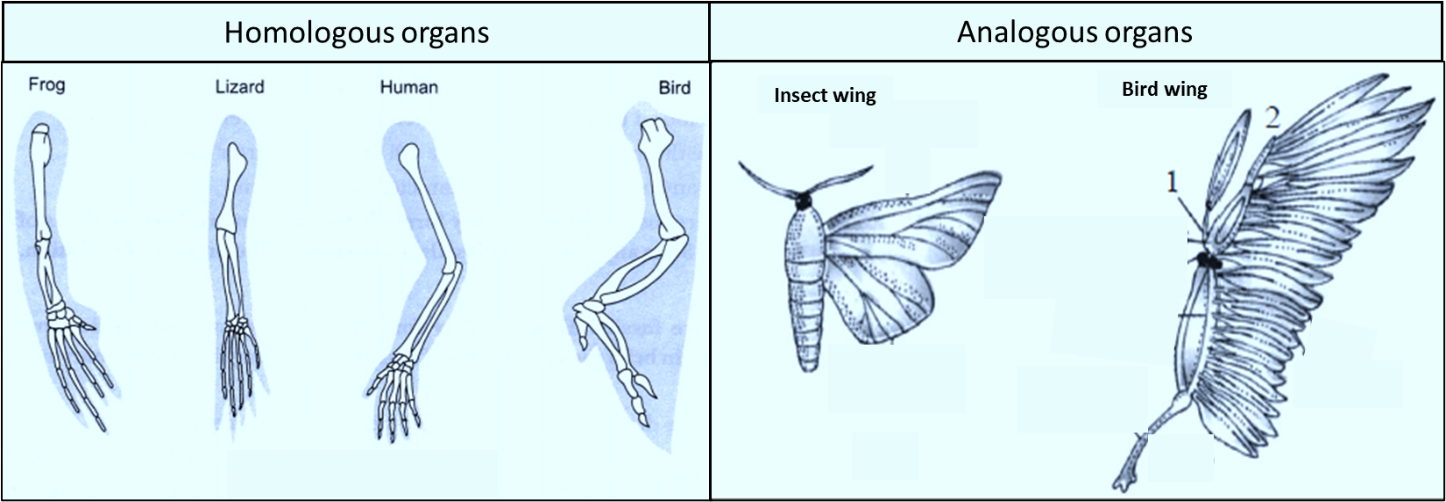
homology v. analogy
- not everything that is similar is related.
- not everything that is dissimilar is unrelated.
II. Towards interesting comparisons
what's interesting?
Davis, M. S. 1971. That’s interesting! Towards a phenomenology of sociology and a sociology of phenomenology. Philosophy of the social sciences 1, 309–344.
Candea, M., P. Heywood, A. Reed & T. Yarrow 2025. Ethnographies of interest: Theorizing knowledge between enthusiasm and instrumentalism. Current anthropology.
four options
| related | unrelated | |
| similar | similar because related | similar despite being unrelated |
| different | different despite being related | different and unrelated |
| related | unrelated | |
| similar | regularity/law | |
| different |
e.g.
- ‘stiob’ in USSR and US (cf. lecture 1)
- All your interlocutors use the same metaphor
| related | unrelated | |
| similar | ||
| different | change |
e.g.
- Immunity in the US in the 1950s, immunity in the US in the 1980s (cf lecture 2)
- Your younger and older interlocutors have different perspectives on the same issue
| related | unrelated | |
| similar | continuity | |
| different |
- e.g. Lenin's body treated like an orthodox saint (Yurchak, cf. SAN1 theory lecture 1)
| related | unrelated | |
| similar | ||
| different | alterity |
- e.g. Islamic vs liberal takes on the Danish Cartoons (Mahmood, cf. last week)
III. the problem of units, and its solution
internal differences
“After all, within “a” people, there are always other people, and anthropology should take them seriously too. For some of the people I worked with in Corsica, being Corsican involved significant stable differences that required political (and anthropological) recognition. For others, being Corsican was just a version of being a French citizen like myself. Others did not live in either of those worlds and spoke to me as Europeans, Mediterraneans, teachers, or mothers. In cases such as these (which I suspect means most if not all cases with which anthropologists actually deal), allowing people to specify the conditions under which what they say is the case must crucially involve refraining from deciding who the “they” is, to begin with.” (Candea 2011)
blurred edges and transformations
“Chicago happened slowly, like a migraine. First they were driving through countryside, then imperceptibly, the occasional town became a low suburban sprawl, and the sprawl became the city.” (Gaiman 2004:82)

constant change
“the ethnographic present”
Fabian, J. 1983. Time and the other, how anthropology makes its object. New York: Columbia University Press.
the solution
- switch your perspective: not a problem, an opportunity!
Units are not a preliminary to comparison, they are made and unmade through comparison
- With other anthropologists
- With other scholars
- With interlocutors
- With broader publics
“As in the rest of the Middle East and North Africa, the Islamic revival in France encompasses a broad swathe of doctrinal trends, ethical, religious, and political sensibilities, and ritual and hermeneutical practices. Moreover, in France, this diversity is complicated by generational divergences. I therefore do not ascribe the particular religious subjectivity under discussion to all participants in the Islamic revival (and certainly not to all Muslims in France). Most of my interlocutors for this article were ‘second generation,’ that is, the children of immigrants from the Maghreb and, to a lesser extent, sub-Saharan Africa; a few were converts (or ‘reverts’). All of them had been born or grown up in France in the blue-collar suburbs (banlieues) of Paris, Rennes, Nantes, and Lyon. In addition, though their parents were or had been part of a proletarian workforce, most of my interlocutors had or were studying for postsecondary-school degrees, often in communications, accounting, or social work. The practices and sensibilities I describe here, then, are particularly salient to those I call ‘Muslim citizens,’ that is, women and men committed to practicing Islam as French citizens and to practicing French citizenship as Muslims, women and men who often identify as citoyens français de confession musulmane (French citizens of Muslim faith) and who comprise a demographically and politically significant aspect of the revival.” (Fernando 2010:20)
Conclusion
- week 1: it's not impossible!
- week 2: thick comparisons
- week 3: interesting comparisons
week 4: reflexive comparisons