SAN2. Rethinking Comparison
Lecture 2: similar and different
(handout)Matei Candea
[email protected]
Introduction
I. analogy and generalisation
anthropology as a generalizing science?
Radcliffe-Brown, A. R. 1951. The comparative method in social anthropology. Journal of the Anthropological Institute of Great Britain and Ireland 15–22.
- Idiographic descriptions of the particular (history, ethnography)
- Nomothetic induction of general social laws, patterns, etc. (anthropology) The aim of anthropology is to “formulate and validate statements about the conditions of existence of social systems and the regularities that are observable in social change”
“Without systematic comparative studies, anthropology will become only historiography and ethnography.” (R-B)
e.g. R-B on 'dual organization'

Matrilineal exogamous moieties characterized by reference to birds
- amongst “various tribes New South Wales” (Australia): eaglehawk and crow
- also amongst Haida of North-West America: eagle and raven
“After a lengthy comparative study I think I am fully justified in stating a general law, that wherever, in Australia, Melanesia or America, there exists a social structure of exogamous moieties, the moieties are thought of as being in a relation of what is here called 'opposition’.”
even more general…
"Another significant custom in which is expressed the relation of opposition between the two moieties is that by which, in some tribes of Australia and in some of North America the moieties provide the 'sides ' in games such as football. Competitive games provide a social occasion on which two persons or two groups of persons are opponents. Two continuing groups in a social structure can be maintained in a relation in which they are regularly opponents. An example is provided by the two universities of Oxford and Cambridge"
even MORE general!
“the Yin-Yang philosophy of ancient China is the systematic elaboration of the principle that can be used to define the social structure of moieties in Australian tribes”
OMG!!!
"The Australian idea of what is here called 'opposition' is a particular application of that association by contrariety that is a universal feature of human thinking, so that we think by pairs of contraries, upwards and downwards, strong and weak, black and white."
Is generalisation reliable?
Hume on the problem of induction and arguments by analogy
see for instance Lipton, P. 2004. Inference to the Best Explanation. (2 edition). London; New York: Routledge.
II. difference as a goal
is generalisation good?
- shouldn't the point of anthropological comparison be to unsettle our certainties?
to point to differences, not universals?
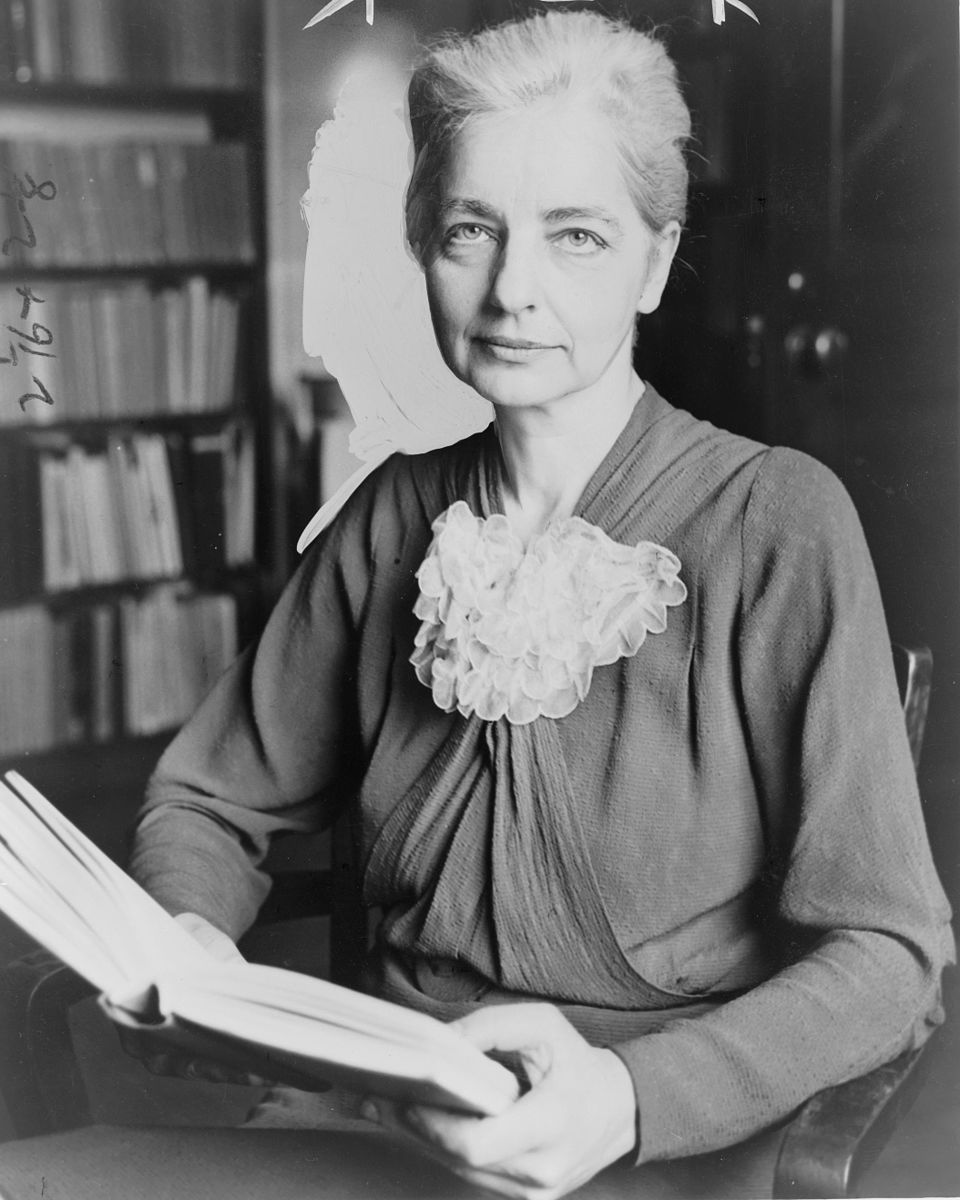
Ruth Benedict
- versus those who argued "that all the differences between East and West, black and white, Christian and Mohammedan, are superficial and that all mankind is really like-minded. […] To demand such uniformity as a condition of respecting another nation is, […] as neurotic as demanding it of one's wife or one's children." Her aim instead: "a world made safe for differences" (1974:14-15).
- e.g 'The Chrysanthemum and the Sword'
difference as good in itself?
"the acuity of a glance that distinguishes, separates, and disperses, that is capable of liberating divergence and marginal elements– the kind of dissociating view that is capable of decomposing itself, capable of shattering the unity of man’s being through which it was thought that he could extend his sovereignty to the events of his past.” (Foucault)
e.g. Saba Mahmood on the 'Danish cartoons'
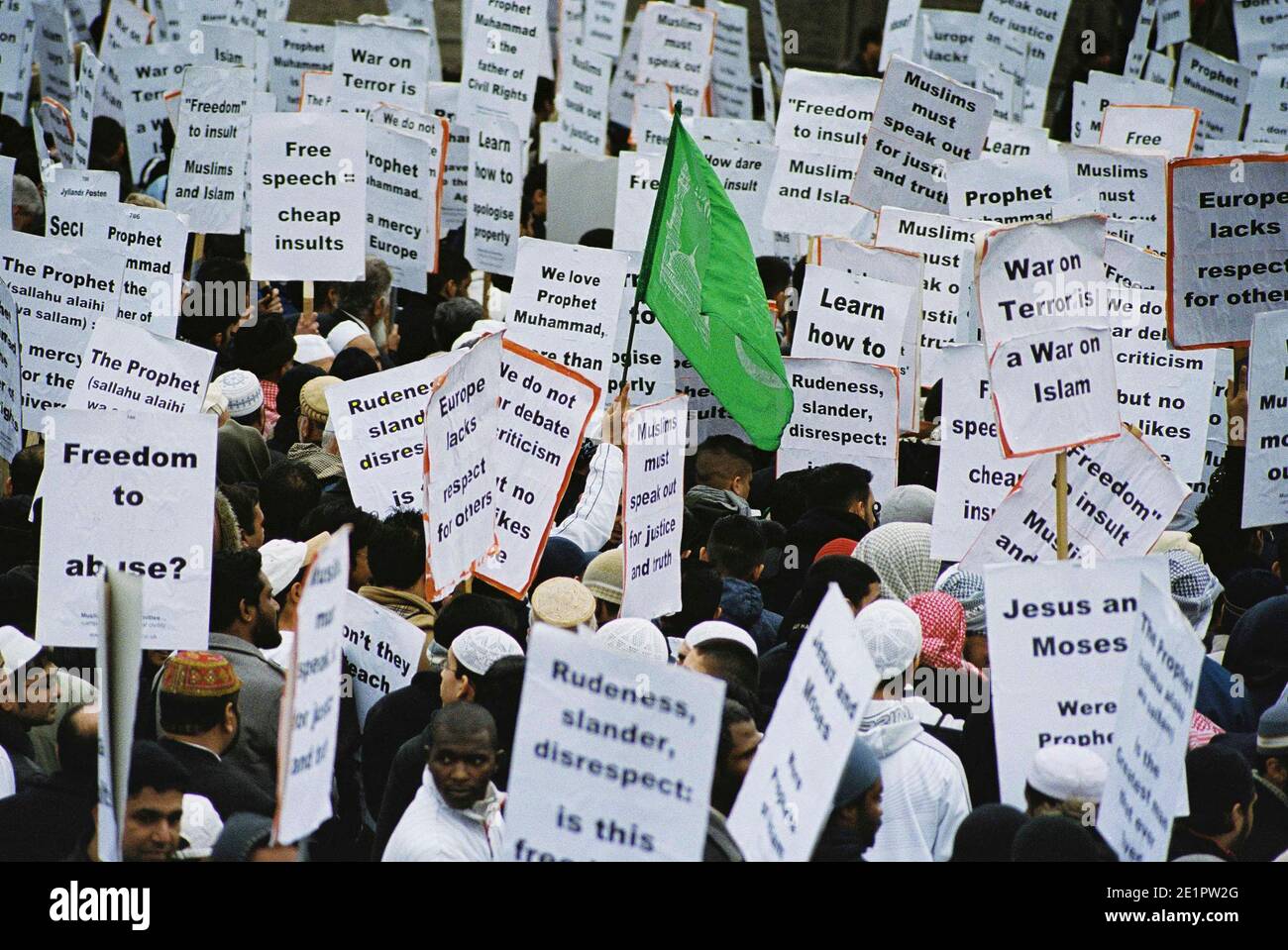
- 2005 Danish journal Jyllands Posten publishes cartoons of prophet Muhammad
- protests and outrage from Muslims in Denmark and worldwide
religious law vs free speech?: “even the calmer commentators seemed to concur that this was an impasse between the liberal value of freedom of speech and a religious taboo. [..] It is this consensus across opposed camps that I want to unsettle in this essay” (Mahmood 2009:67)
Mahmood (cf. Asad and Keane): two different 'semiotic ideologies'
- western secular representationalism
- Islamic semiotics of participation
Asad, T., S. Mahmood, J. Butler & W. Brown 2009. Is critique secular? : Blasphemy, injury, and free speech. Berkeley: University of California Press.
Keane, W. 2009. Freedom and blasphemy: On indonesian press bans and danish cartoons. Public culture 21, 47–76.
Critiques of Mahmood's dichotomy between Islamic and Western semiotic ideology
- Bhojani, A.-R. & M. Clarke 2025. Risking speech in islam. In Freedoms of Speech: Comparative perspectives on language, ethics and power (eds) M. Candea, P. Heywood, T. Fedirko & F. Wright. Toronto: University of Toronto Press.
Candea, M. 2024. French law, danish cartoons, and the anthropology of free speech. Comparative studies in society and history 1–28
III. towards thick comparisons
two kinds of comparison, again?
Caesurism:
- empiricist or ‘radical’ (Dumont)
- positivist or interpretivist (Holy)
- representative or disjunctive (Lazar)
- translation or ‘equivocation’ (Viveiros de Castro)
Etc.
generalising ≠ universalising
controlled comparison
Eggan, F. 1954. Social Anthropology and the Method of Controlled Comparison. American Anthropologist 56, 743–763.
“I am not sure, to give one example, that the “Yin-Yang philosophy of ancient China is the systematic elaboration of the principle that can be used to define the social structure of moieties in Australian tribes” (1951:21), though Radcliffe-Brown’s analysis and wide experience give it a certain plausibility. My own preference is for the utilization of the comparative method on a smaller scale and with as much control over the frame of comparison as it is possible to secure. It has seemed natural to utilize regions of relatively homogeneous culture or to work within social or cultural types, and to further control the ecology and the historical factors so far as it is possible to do so.”
structuralist ethnographic comparison
- analogies within a specific setting
e.g. Okely, J. 1983. The traveller-gypsies. Cambridge: Cambridge University Press.
- trailers
- sinks
- cats
- hedgehogs
=> inside/outside
making big (but not universal) claims
remember Boyer and Yurchak on American Stiob
thick comparison
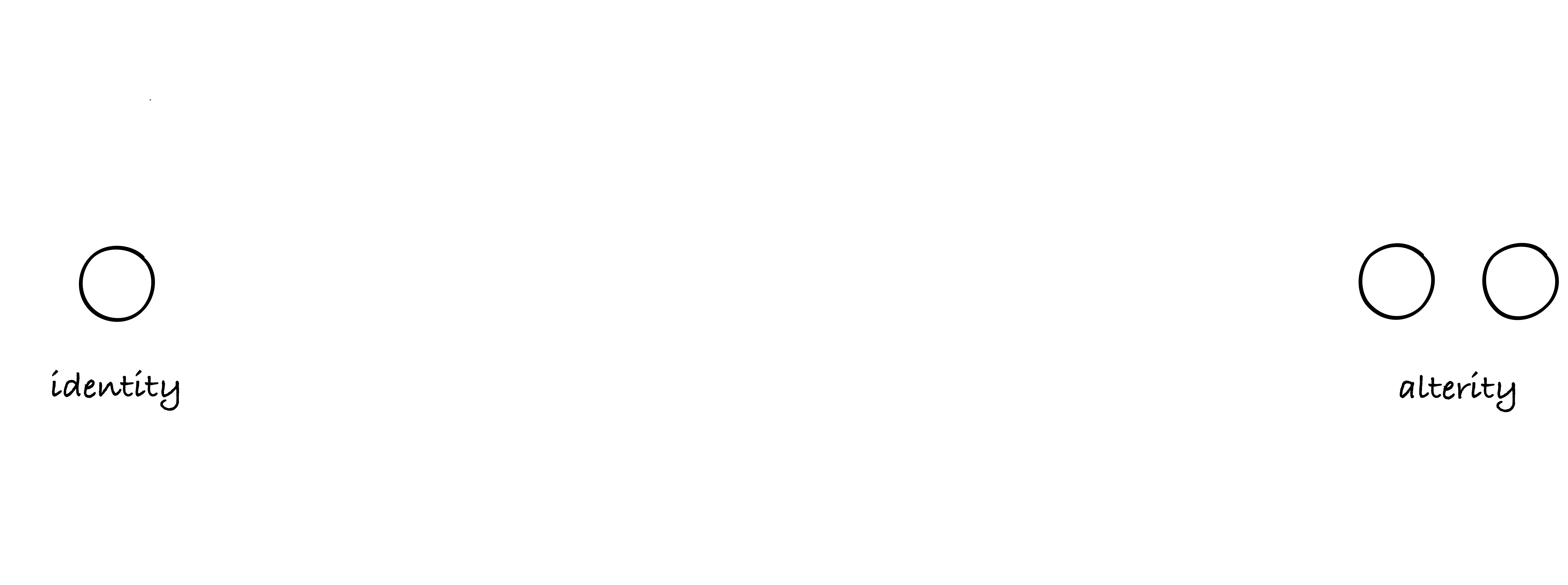
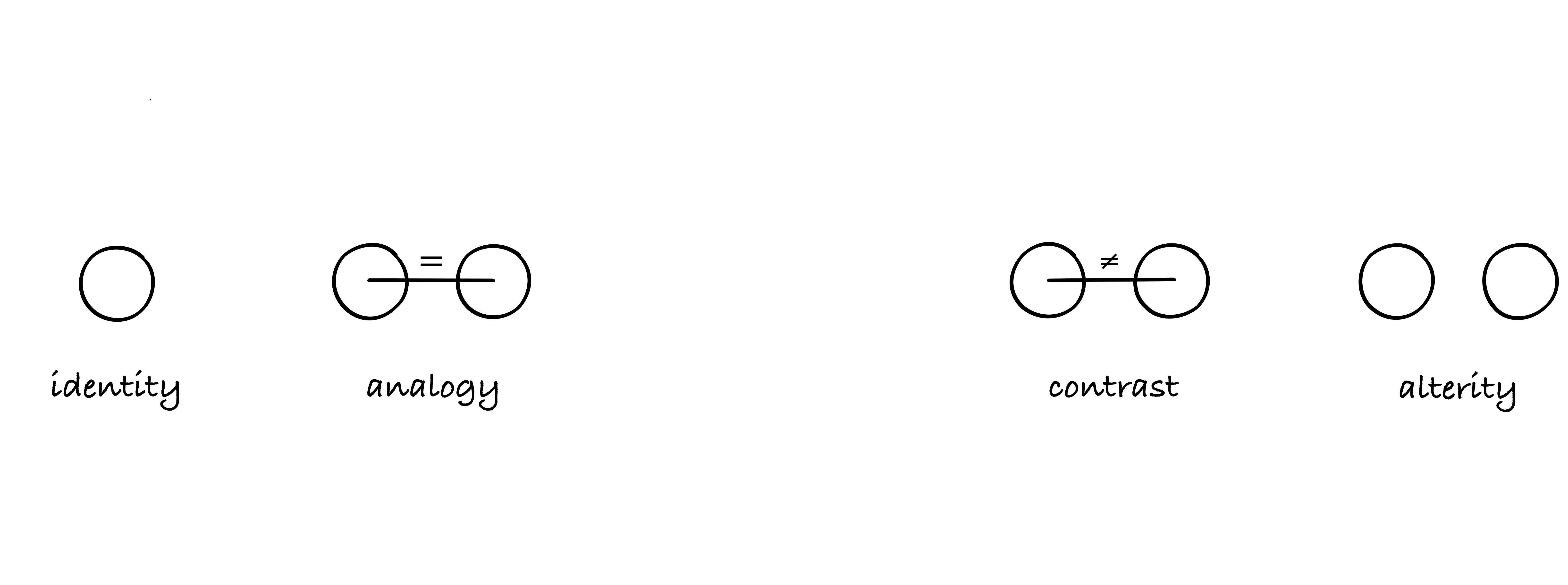
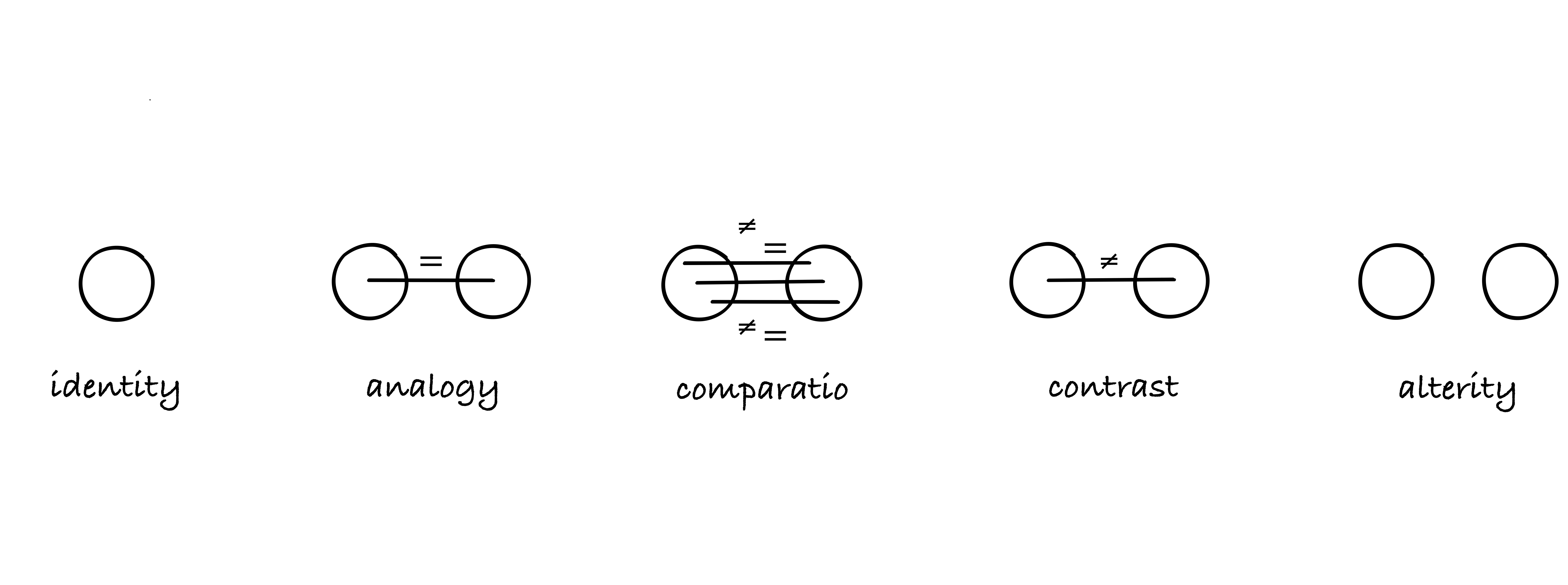
comparatio
You pass wakeful nights that you may be able to reply to your clients; he that he and his army may arrive betimes at their destination. You are roused by cock-crow, he by the bugle’s reveille. You draw up your legal pleas, he sets the battle in array. You are on the watch that your clients be not taken at a disadvantage, he that cities or camps be not so taken.
Cicero, Pro Murena
e.g. two ways with identity

Malkki, L. H. 1995. Purity and exile: Violence, memory and national cosmology among Hutu refugees in tanzania. Chicago: University of Chicago Press.
- Mishamo refugee camp
local town of Kigoma
e.g. changing American bodies
| 1950s | 1980s | |
|---|---|---|
| the age of | polio | AIDS |
| body | fortress | complex system |
| political context | cold war | globalisation |
| economic context | fordism | neoliberalism |
| philosophical context | modernism | post-modernism |
| social order | hierarchy | self-responsibility |
conclusion: